


Exposure Brings Toxicology Findings Into Context
9.17.26
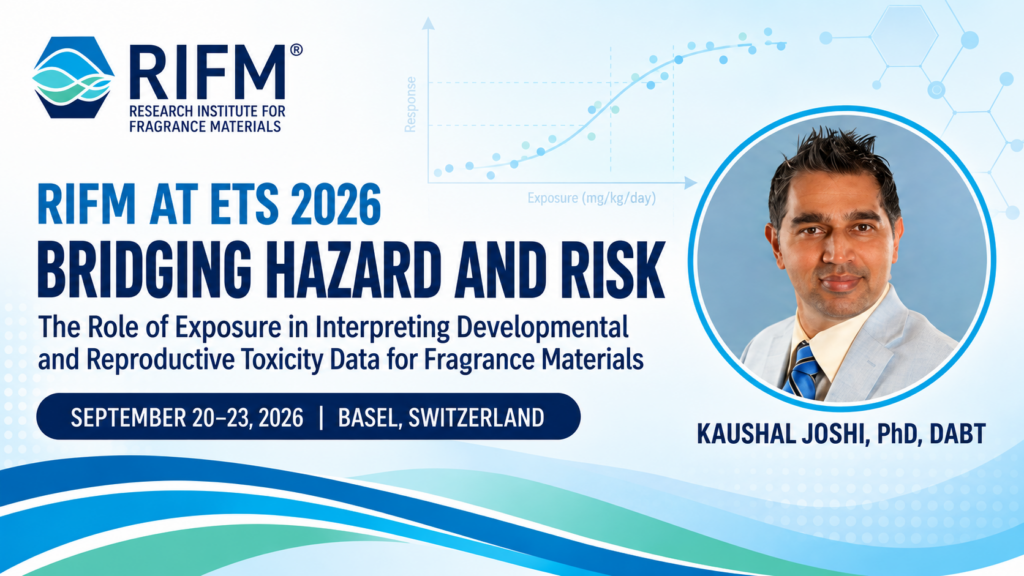
RIFM Principal Scientist Kaushal Joshi, PhD, DABT, will present new research at the 54th Annual Meeting of the European Teratology Society, taking place September 20–23, 2026, in Basel, Switzerland.
Dr. Joshi’s poster, “Bridging Hazard and Risk: The Role of Exposure in Interpreting Developmental and Reproductive Toxicity Data for Fragrance Materials,” will be presented during the poster session on Monday, September 21, from 6:00 to 7:00 PM local time.
The research addresses an essential question in safety assessment: What does a toxicological finding mean in the context of actual human exposure?
Hazard data identify a substance’s potential to cause an effect under particular study conditions. Risk assessment goes further by considering that potential alongside the amount of a substance to which people are exposed. Integrating realistic human exposure estimates with developmental and reproductive toxicity data can therefore provide critical context for interpreting study findings.
This distinction is particularly important when evaluating findings from studies conducted at dose levels far above expected human exposure. Comparing those study doses with realistic exposure estimates helps scientists assess the relevance of observed effects and supports more scientifically informed safety assessments for fragrance ingredients.
“I’m excited to share research that demonstrates how exposure information can transform the interpretation of toxicology data and help bridge the gap between hazard identification and real-world risk,” Dr. Joshi said.
The 2026 ETS scientific program brings together international experts in developmental and reproductive toxicology to examine emerging research, data interpretation, and new approaches to safety assessment.